Thursday, 15 May 2014

World Information Society Day


It’s World Information Society Day! 


Saturday 17 May is a day to recognise the importance in ALL of our lives of ICT and the internet, and to think about closing the digital divide.


Students logging on for another class
In rural Uganda, access to ICT and the internet is not an everyday affair. In the developed world we now take digital connectivity for granted, including on the move, but in Kamuli only a few weeks ago the city’s internet access was cut off thanks to a truck on the outskirts of town bringing down the single overhead cable that supplies it!


Despite such privations – and an intermittent power supply – UDS continues to work to train young Ugandans in the computer skills that are transforming lives.


Irene is now working and earning thanks to her ICT skills
Our young students are learning skills and gaining opportunities their parents never had. They are going out and getting jobs, earning a wage, going to university even, thanks to the grounding in ICT that UDS has given them.

Please help us to carry on and educate further generations of young Ugandans. Click here to make a donation of £10 which could train a school child to use the computer and give them essential, life long skills. 

Wednesday, 14 May 2014

International Families Day 2014


It’s time to celebrate the family. Thursday May 15 marks International Day of Families 2014, 20 years since the UN General Assembly declared 1994 the International Year of the Family.  And as we approach the 1015 target for the MDGs, this year’s theme is “Families Matter for the Achievement of Development Goals.”
Farmer Fred Bikaba tends his pineapple crop

Our work in Kamuli is based around families, rural families in one of the poorest countries in the world. Most of the families we serve live from farming, eking out a living from small plots in the countryside.

But slowly we are transforming lives, teaching better farming methods, encouraging farmers to grow more and better crops, and encouraging them to expand beyond mere subsistence farming.
Model farmer Robert Lyadda


A few years ago, most farmers in Kamuli district simply grew enough to feed themselves and their families – living, effectively, a dirt-poor existence. But now many of them have been trained to harvest bigger and better crops, providing them with a surplus to take to market and sell for much-needed cash. 
Robert Lyadda runs a training session


One of our model farmers, Robert Lyadda, leads the way, growing and selling his own crops and going out as an instructor, teaching others to follow his example.
So please help us continue this work, and get more rural families benefitting from our programmes.   

Click here to donate. Just £10 a month would train a farmer and help their family escape poverty and live a healthier life. 

Wednesday, 16 April 2014

Join our Read & Raise scheme for World Book Night

As we celebrate World Book Night in the UK and Ireland on Wednesday 23rd April, please spare a thought for the children of Kamuli in Uganda, where we are active in raising the very low literacy rates. The children of Kamuli District have the third lowest literacy level in Uganda. Only 14 per cent of the Kamuli children in P6 (aged 10-11) have adequate literacy skills as compared with the national average of 40 percent.

Chidren in Kamuli show off their new books
We have now provided reading materials to four  primary schools under our new literacy project. We'd like to expand the scheme to more schools, but books cost money, and we need your help to buy them.

This is where our Read & Raise initiative comes in. If you belong to a book club, we'd like to ask you to make a donation every time you meet. Just £5 will buy two books for the classrooms.  Click here to make a one off or regular donation to this project.  

Next time your book club meets, please mention this to your fellow members. Hold a book sale of your second hand books or collect any second hand copies of the Ladybird Key Words scheme for us to send out to Uganda. Spread the word - and help get more Kamuli children reading!


Help build a smokeless oven for Earth Day 2014


Tuesday 22nd April is Earth Day 2014. Earth Day was conceived back in 1970 as an annual reminder of the need to take care of our natural environment. Today, 44 years on, that need is even more pressing, which is why we'd like to remind you of our smokeless ovens programme.

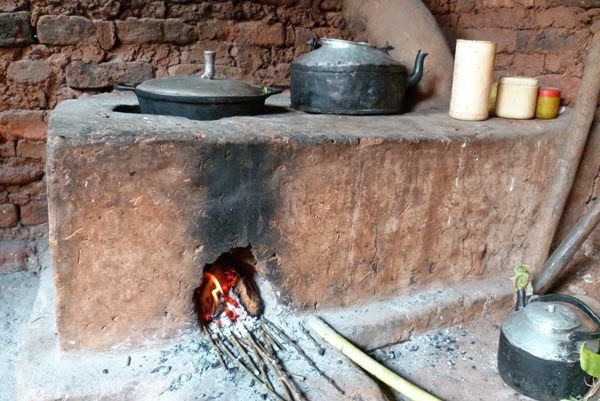
A smokeless oven in action
These ovens, built of mud and straw, replace the traditional cooking method using firewood and three stones. This form of cooking causes indoor pollution which can lead to pneumonia, chronic bronchitis and lung cancer. But a smokeless oven makes the cooking process inside the home safe and smoke free.


Another enormous benefit of the smokeless oven is that it uses 60 percent less firewood than the open fire method. Over a three-week period, a family with a smokeless oven will use the same amount of burning materials that previously lasted them only one week. And two pots can be cooked at once on our smokeless oven, making further savings in both fuel and labour.

Mixing the raw ingredients to build an oven
The material to make the ovens is found naturally, and is cost-free. It costs us only £30 to train someone to build an oven.  We've built several hundred of these ovens so far. That's several hundred families living and cooking in a safer, cleaner environment.

 Please  help us train more people and build more ovens.

Text SMOU13 £5 or more to 70070 to make a donation to this appeal.  Alternatively you can click here to donate online.

Go here to read more about our smokeless ovens programme.

Thursday, 3 April 2014

A visit to our Literacy Project


The UK Administrator, Sue Craig, visited Kamuli at the end of March and had the opportunity of visiting two schools that are involved in our Literacy Project. 

The first school, Kasambira, is a small rural school about 5 km outside of Kamuli.  A huge welcome was given to the visitors - Sue, Programme Manager Andrew Yiga, and Project Officers David Suuna and Doris Nabugasha.   After the children sang their welcome, the teachers thanked UDS for the difference that the books and training from UDS have made. Several children then read out loud from the books that they had chosen.
Children at Kasambira school

 
At Bezallel, the visitors heard a P4 class read out in class – some in groups and some as individuals.  An audio excerpt from this class can be heard here.  The teacher, Rose Muzira, who has overall responsibility for literacy at the school said that her P4 class, who had received the input from UDS when they were in P3, were better readers than her P5 class.   

Reading in class at Bezallel

Learning to read is such an important stage in a child’s life.  In Uganda the local language is used for the first couple of years, but when they reach P3 – our equivalent of Year 3 at Primary school – they have to read and write in English, as all the national curriculum is carried out in English.  Being confident readers not only helps them speak English, but also helps with their studies.  Both schools said how their overall academic performance has improved since UDS have been intervening with the literacy element of their learning. 
Reading out loud in Kasambira school

Both of these are poor rural schools with very limited resources.  They are “private” schools charging approximately £15 per term per student.  This gives the parents a better level of teaching than in the government schools, but there are still not enough teaching materials to go around the classes. 

The schools are using the Ladybird reading scheme and each books costs around £2.50. A donation of £5 per month could buy enough books for a class over the course of the year, or a simple text donation of £5 could buy two books.   

Please help – these children really need your support. To donate, please text UDSL13 £5 or more to 77070.